What to Expect During Your First Visit to an Emergency Dentist

A dental emergency has a way of shrinking your world down to one tooth, one swelling, one sharp throb that makes it hard to think about anything else. Most people do not schedule an appointment with an Emergency Dentist because life is running smoothly. They call because something has gone wrong, often suddenly, and they need relief, answers, or both.
If this is your first urgent dental visit, the unknown can add another layer of stress. Patients often wonder whether they will be judged for waiting too long, whether the pain will get worse during treatment, whether they will lose the tooth, or whether they are heading into a costly procedure without warning. In practice, most emergency dental visits are more straightforward than people expect. They are built around triage, diagnosis, pain control, and a realistic plan.
The first thing to understand is that emergency dentistry is not the same as routine dentistry with a faster appointment slot. The goals are narrower and more immediate. Your dentist is looking for the source of the problem, checking whether there is infection, trauma, bleeding, nerve involvement, or damage to the surrounding structures, and deciding what needs to happen now versus what can safely wait a few days. Sometimes the problem is solved in one visit. Sometimes the first visit stabilizes the situation and sets up definitive treatment later.
What counts as a dental emergency
Some situations are obvious. A tooth gets knocked out during a game. A filling falls out and the exposed tooth starts sending lightning-bolt pain through your jaw. You wake up with one side of your face visibly swollen. Other cases are less dramatic but still urgent, such as a cracked molar that hurts every time you bite, a broken crown that leaves the tooth vulnerable, or bleeding after an extraction that does not settle down.
Pain alone does not always tell the whole story. A small chip can feel minor but hide deeper structural damage. A large cavity can be surprisingly painless until the nerve becomes involved, then the change is abrupt. Swelling, fever, bad taste in the mouth, pus drainage, difficulty swallowing, and inability to open the mouth normally all raise the urgency. The same is true for trauma to the teeth or jaw, even if the area looks better than it feels.
One point patients are often relieved to hear is that emergency dentists see a wide range of problems every day. A broken denture before a wedding, a child with a front tooth injury after falling off a scooter, an adult who ignored sensitivity until it became a weekend abscess, these are not unusual stories. The appointment is not about blame. It is about damage control and decision-making.
Before you arrive
If you call ahead, the office will usually ask a few direct questions. Where is the pain? When did it start? Is there swelling? Did trauma cause it? Are you bleeding? Can you breathe and swallow normally? Have you taken anything for pain? Those questions help the team determine urgency and prepare the room, imaging, and sometimes the medications or materials most likely to be needed.
If a permanent tooth has been knocked out, timing matters. The tooth has the best chance of being saved if it is kept moist and brought in quickly. Ideally, hold it by the crown, not the root, and place it in milk or keep it in the mouth between the cheek and gums if that can be done safely. If a crown, bridge, veneer, or broken tooth fragment came out intact, bring that too. Even when it cannot be reattached, it can help the dentist understand what failed.
The practical side matters as well. If you can, bring a photo ID, insurance information, a medication list, and the name of your regular dentist if you have one. If you are in significant pain, it helps to write down what pain medicine you took and when. Patients frequently arrive too uncomfortable to remember whether they took 400 or 800 milligrams of ibuprofen two hours ago or six. That detail affects what the dentist can safely recommend next.
A short checklist can make the visit smoother:
- Bring any broken tooth piece, crown, appliance, or knocked-out tooth if available.
- Note your symptoms, when they began, and what medication you have already taken.
- Carry a list of medical conditions, allergies, and current prescriptions.
- Avoid eating just before the visit if you think an extraction or procedure may be needed.
- Arrange a ride if you may receive sedation or strong medication.
That last point is easy to overlook. Not every emergency visit involves sedation, but some do, especially if there is severe anxiety, a complex extraction, or significant trauma. If there is any chance you will not be safe to drive afterward, plan ahead.
What happens when you check in
The front desk portion of an emergency dental visit is usually brief, but it is still important. You will likely complete health history forms and sign treatment and financial consent documents. If you are a new patient, this is where existing medical conditions become especially relevant. Diabetes, heart conditions, blood thinner use, pregnancy, immune suppression, osteoporosis medications, and medication allergies can all influence treatment choices.
This surprises some people, but a toothache is not always just a toothache. Jaw pain can be referred from clenching or sinus pressure. A lower molar can send pain into the ear. A tooth with a dead nerve can stop hurting while the infection continues to spread. That is why the office does not simply hand out antibiotics or proceed straight to drilling. A good emergency evaluation starts with a snapshot of your overall health and current symptoms.
If your face is visibly swollen, your speech is muffled, or you look acutely unwell, the clinical team may move faster than usual. In severe infections, especially those affecting swallowing or breathing, a dental office may determine that hospital care is the safer next step. Emergency dentists know where the line is between office treatment and medical emergency, and patients are better served when that call is made early.
The examination is focused, not rushed
A first emergency visit often feels brisk because the problem is urgent, but the exam itself should still be methodical. The dentist will ask where it hurts, what makes it worse, whether it wakes you at night, whether hot or cold triggers pain, whether pressure causes tenderness, and whether the pain is sharp, dull, throbbing, or constant. Those descriptions help narrow the cause. Nerve inflammation, a crack, gum infection, sinus involvement, and trauma each have a different pattern.
The clinical exam may include tapping the tooth, checking mobility, testing the gums, looking for fractures, inspecting existing fillings and crowns, measuring swelling, and assessing your bite. If trauma is involved, the dentist may also examine lips, cheeks, tongue, and bone support, not just the tooth itself. A chipped front tooth after a fall can come with small lacerations or fragments embedded in soft tissue. That https://www.google.com/maps?cid=9042865669086661852 changes treatment.
Dental X-rays are commonly part of the first visit. A standard periapical image can reveal deep decay, an abscess, bone loss, root damage, or changes around the tip of the root. In some offices, a panoramic X-ray or 3D scan is used if the injury is more complex, such as a suspected fracture extending below the gumline or a difficult wisdom tooth issue. Imaging does not answer everything, but it often confirms the difference between a problem that can wait until next week and one that needs attention the same day.
Pain control usually starts early
One of the biggest fears patients bring into the room is that the exam or treatment will make the pain dramatically worse. In a well-run emergency appointment, pain control is not an afterthought. If the tooth is highly inflamed, the dentist may begin with local anesthetic before doing more invasive testing or treatment. When a person arrives holding the side of their face and barely able to speak, nobody benefits from pretending they can calmly tolerate a prolonged diagnostic process first.
That said, numbing an emergency tooth can sometimes be trickier than numbing a healthy area for planned work. Infected tissues can be acidic, which makes local anesthetic less effective. It may take more than one injection technique, and full relief may not be instant. Patients interpret this as the anesthesia "not working," but often it means the dentist is working around difficult biology, not poor technique. A calm explanation helps a lot here.
Over the counter pain medicines may also be part of the plan, often in alternating or combined strategies depending on your health history. Dentists are generally careful with stronger prescription pain medication, and many emergencies can be managed effectively without it once the source of the problem is treated. If the pain is from pressure inside the tooth or an active infection, definitive care usually helps more than simply adding stronger pills.
The treatment may be complete, temporary, or staged
This is the part that catches some first-time patients off guard. An emergency visit is not always designed to finish every aspect of care in one sitting. It is designed to make the situation safe, manageable, and less painful. Whether full treatment happens that day depends on what is found.
Common same-day treatments include:
- Recementing or replacing a lost crown or temporary restoration.
- Draining an abscess or starting treatment to relieve pressure and infection.
- Smoothing or bonding a chipped tooth that has sharp edges or exposed dentin.
- Beginning root canal treatment when the nerve is the clear source of severe pain.
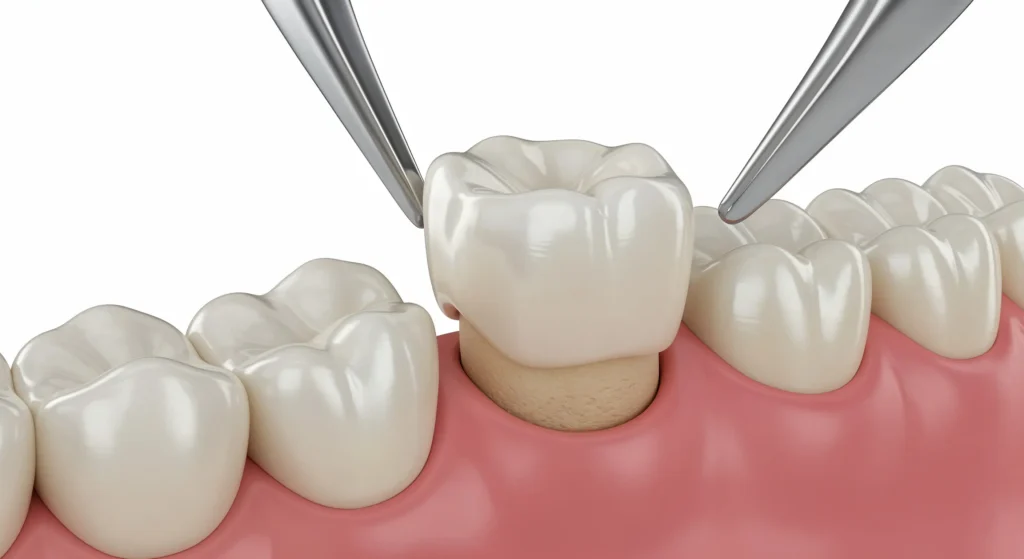
- Extracting a tooth that is beyond repair or causing uncontrolled symptoms.
Even within those categories, there are trade-offs. A badly broken molar may be restorable, but not if the crack runs into the root. A tooth with severe infection might be saved with root canal therapy, but if too much structure is gone above the gumline, the better long-term decision may be extraction. A front tooth can often be patched beautifully in an emergency, yet still need cosmetic refinement later. Real emergency dentistry involves judgment, not just speed.
Temporary treatment is common and often appropriate. A sedative dressing may be placed in a painful cavity. A fractured tooth might get a provisional build-up to protect it until a crown can be made. A loose splint may stabilize a traumatized tooth after an accident while healing is monitored over weeks. Patients sometimes feel disappointed when the solution is not fully "done" that day, but staged care is often the safest and most durable approach.
When antibiotics are used, and when they are not
Many people walk into an emergency dental appointment expecting antibiotics to be the main answer. Sometimes they are necessary, especially if there is spreading infection, facial swelling, fever, or gum and soft tissue involvement. Just as often, they are not the real fix.
A tooth with a dying or infected nerve usually needs mechanical treatment, such as drainage, root canal treatment, or extraction. Antibiotics do not remove infected tissue inside a sealed tooth. They may reduce the spread into surrounding tissues in selected cases, but on their own they often provide partial, temporary relief at best. This is one reason a toothache may improve after a course of antibiotics and then flare right back up later.
A careful Emergency Dentist uses antibiotics when the clinical picture supports them, not as a reflex. That approach protects patients from side effects, allergic reactions, and the false reassurance that the problem has been resolved when it has only been muted.
Costs, timing, and the questions worth asking
Urgent dental care is stressful enough without financial surprises. Charges vary widely depending on the exam, X-rays, procedure, complexity, location, and whether specialist care is involved. Some offices can give a general estimate over the phone, but the final cost often depends on what the dentist finds after the exam. A lost filling and a deep abscess do not live in the same price range.
It is reasonable to ask direct questions. Patients often get better care decisions when expectations are clear. Ask whether today’s visit is likely to be diagnostic only or whether treatment is likely the same day. Ask what the immediate goal is, pain relief, infection control, stabilization, or definitive repair. Ask what can wait safely and what cannot. If more than one option exists, ask about the long-term implications, not just the fastest one.
For example, saving a tooth with root canal treatment and a crown can be the best functional choice, but it is also more involved and more costly than extraction. Extraction may solve pain quickly, yet replacing the tooth later with an implant or bridge carries its own cost and timeline. There is no universal right answer. The right answer depends on the tooth, the prognosis, the bite, your medical history, and your budget.
If you are afraid of the dentist, say so early
Anxiety changes everything about an emergency appointment. It can lower your pain tolerance, make injections feel harder, complicate communication, and increase the chance that you leave without receiving the treatment you actually need. Dentists who handle emergencies regularly are used to this. They would rather know at the beginning than discover it when your shoulders are at your ears and your hands are gripping the chair.
A simple statement is enough. Tell them if you have fainted before, if local anesthetic worries you, if you had a painful past dental experience, or if you panic when you lie back in the chair. Small adjustments can make a major difference. More explanation before each step, slower pacing, breaks, topical anesthetic before injections, noise control, or mild sedation can turn a barely tolerable visit into one you can get through.
This matters especially in emergencies because delaying care out of fear often narrows your options. A cavity that might have needed a filling a few months earlier can become a root canal or extraction later. Nobody likes hearing that, but it is a pattern dentists see every week.
Aftercare is part of the first visit
Before you leave, you should have a clear sense of what was done, what to expect next, and what warning signs mean you need to call back. Mild soreness after treatment is common. Lingering numbness for a few hours is common too. What should not be vague is the plan.
If a tooth was extracted, you will need guidance on bleeding, clot protection, eating, and activity. If the dentist opened a tooth to relieve pressure, you may need a follow-up to complete root canal treatment. If a crown was temporarily recemented, you should know whether that fix is expected to last days, weeks, or longer. If swelling is present, you should know what degree of swelling is expected and what progression is not acceptable.
A good emergency discharge conversation usually covers the practical basics without overwhelming you. When can you eat? Which side should you chew on? Are hot or cold drinks likely to trigger pain for a day or two? Do you need a prescription filled immediately? What happens if the temporary material comes out? The more severe the original problem, the more important those details become.
Recovery is not always linear
People often expect that once the emergency visit is over, the problem should feel dramatically better by the next morning. Sometimes that happens. A tooth opened and drained can feel like a switch was flipped. Other times recovery is uneven. Tissues that were infected or heavily inflamed can remain tender for a few days even after the source has been addressed. A traumatized tooth may settle slowly. An extraction site may throb at night but improve with each day.
The key is the trend. Gradual improvement is reassuring. Escalating swelling, worsening pain after initial improvement, foul drainage, fever, or difficulty swallowing are not. If those occur, call. Patients sometimes hesitate because they do not want to be a bother, but complications are easiest to manage early.
There is also an emotional side to dental emergencies that people rarely talk about. A visible broken front tooth can leave someone embarrassed to smile. A sudden extraction can make a person feel older overnight. A painful infection can be frightening, especially if it spread fast. Part of a professional emergency visit is acknowledging that people are not just managing a tooth, they are managing disruption, fear, and sometimes shame. The best clinicians never lose sight of that.
What surprises first-time patients most
After years of hearing patient reactions, a few themes come up again and again. The first is relief that the appointment was more practical and less dramatic than expected. The second is surprise that diagnosis matters so much, even when the pain feels obvious. The third is how often emergency care is about buying time safely and wisely, not rushing into the biggest procedure available.
Another common surprise is that some of the worst pain comes from conditions that are very treatable. A tiny crack or inflamed nerve can produce misery out of proportion to what is visible in the mirror. On the other hand, a badly damaged tooth can look alarming and still be manageable. Appearance and urgency do not always match, which is why professional assessment matters.
Walking in informed makes the visit easier
If you end up needing an Emergency Dentist for the first time, expect a visit centered on triage, diagnosis, pain relief, and a treatment plan grounded in what can be done safely that day. Expect questions about your health, an exam focused on the painful area, likely X-rays, and a discussion of immediate options. Expect honesty if the tooth can be saved, and honesty if it probably cannot.
Most of all, expect the appointment to have a purpose beyond simply getting you through the next few hours. Emergency dentistry works best when it not only calms the crisis but also sets up the next right step, whether that is a permanent restoration, root canal treatment, extraction aftercare, or specialist follow-up. Once you understand that rhythm, the experience feels less like chaos and more like what it actually is, urgent care with a clear clinical logic behind it.
Simple Dental Vermont
Address: 8914 S Vermont Ave, Los Angeles, CA 90044
Phone number: +13239493000
FAQ About Emergency Dentist Los Angeles CA
What can the ER do for a tooth?
The emergency room can provide temporary symptom relief for a bad tooth, such as prescribing pain medicine or antibiotics, but it cannot fix the actual dental problem.
What is the 3-3-3 rule for tooth infection?
The 3-3-3 rule for a toothache or infection typically means taking three 200 mg ibuprofen tablets (600 mg total) three times a day for no more than three days to control pain and swelling while waiting to see a dentist.
What do you do if you have a dental emergency but no dentist?
If you have a dental emergency and no regular dentist, you should search for an urgent care dental clinic, call local walk-in dental offices, or go to a hospital emergency room if you have severe bleeding, swelling, or trouble breathing.